While she was an art student at The George Washington University, Dana Ellyn worked as a paid intern at the United States Holocaust Memorial Museum, years before it opened to the public. She supported the staff running the museum’s fundraising campaign, transcribed survivor testimony, adapted Encyclopedia of the Holocaust articles for the museum’s archive, and finally traced historical maps of camps and ghettos by hand.
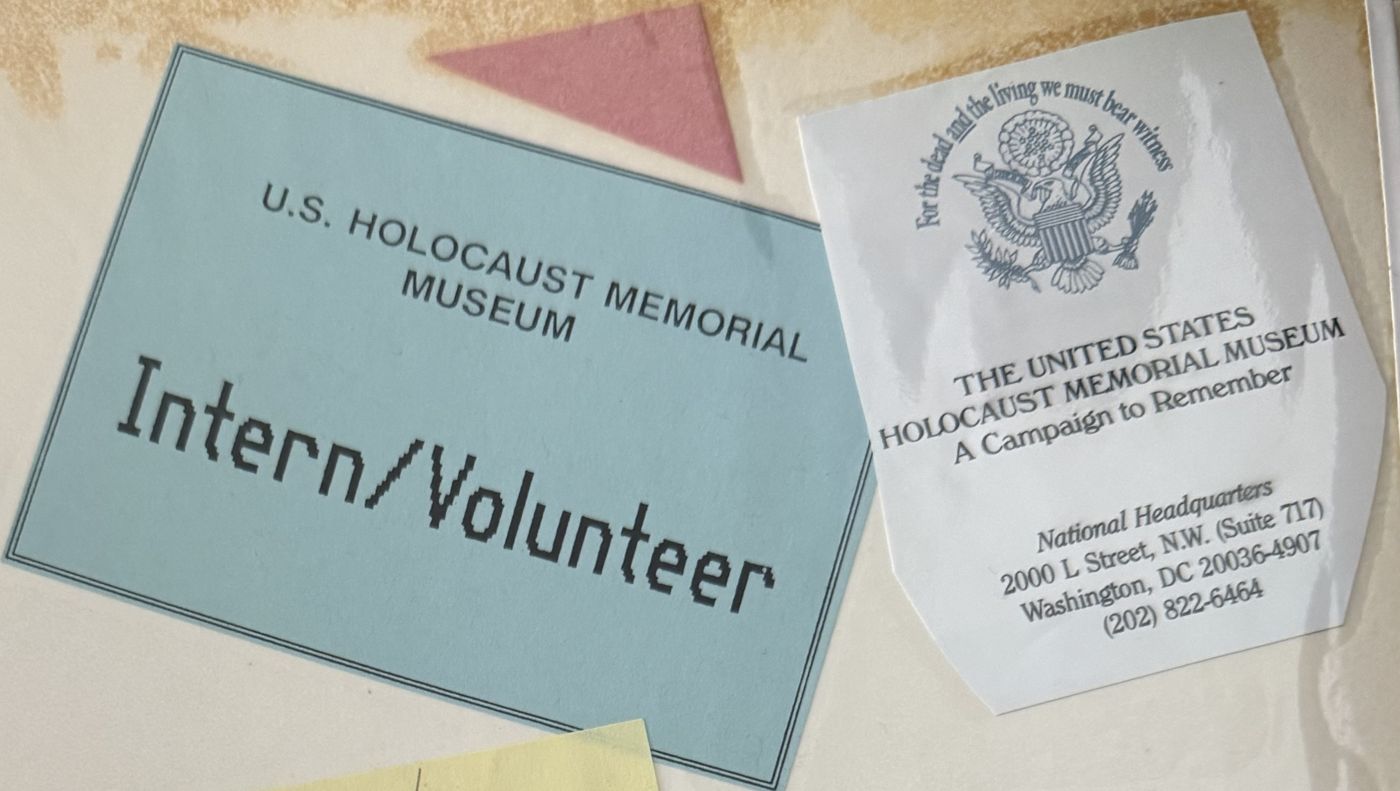
The museum’s intern badge and campaign card, 1991. The seal is ringed with the words “For the dead and the living we must bear witness.”
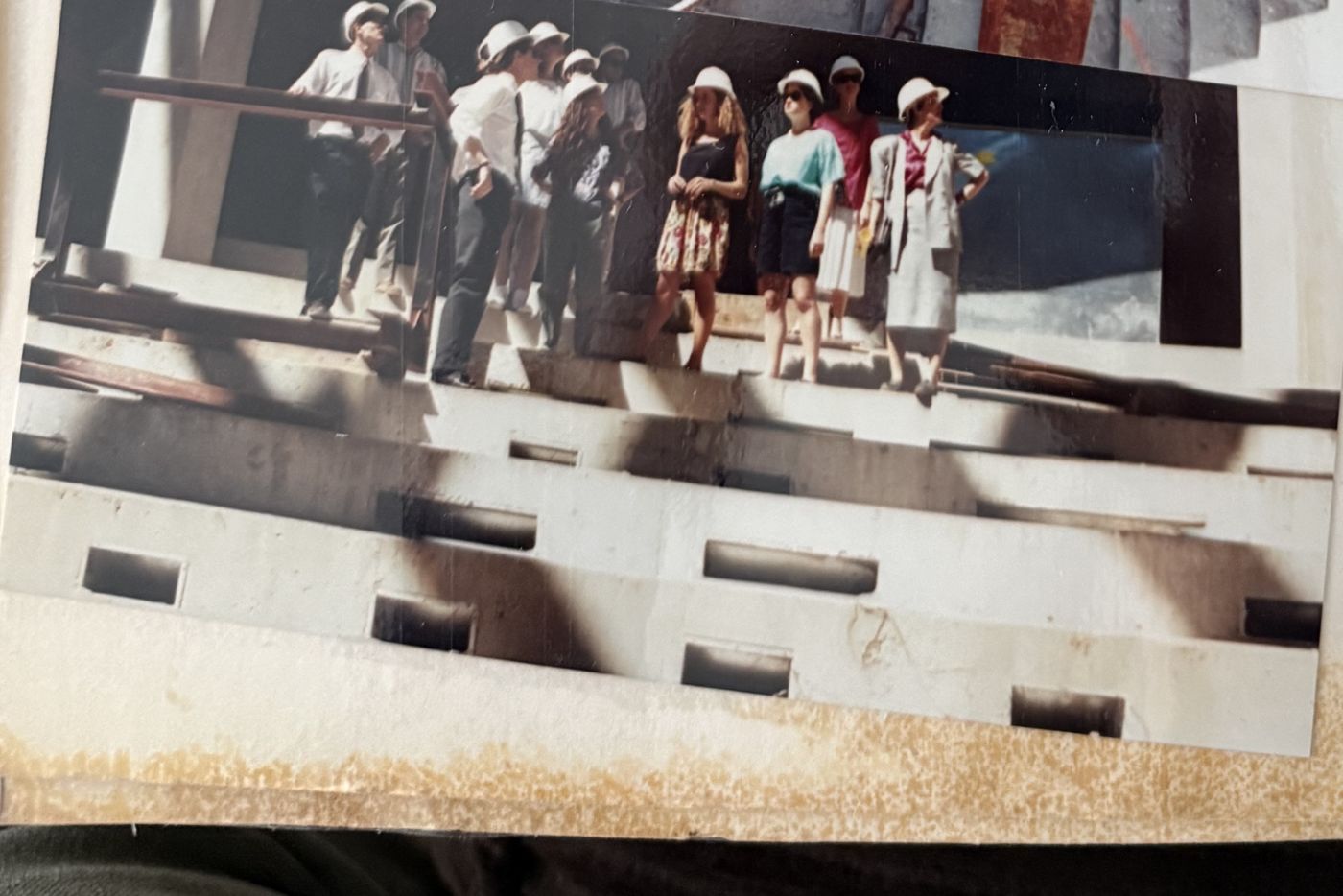
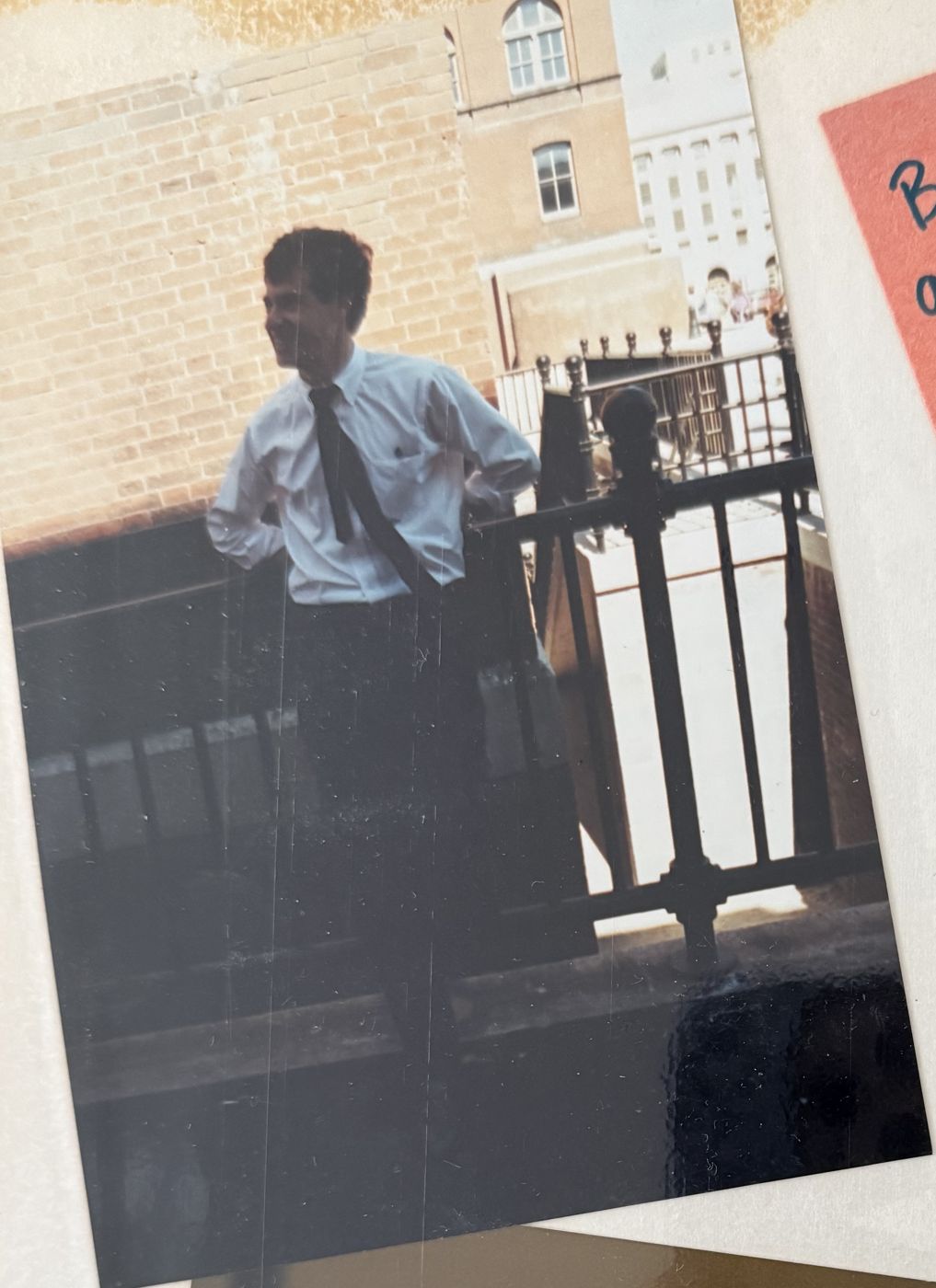
Hard hats inside the unfinished museum, summer 1991. A tour of the construction site for the interns and staff. Dana is third from the right, in the green shirt and dark blue shorts.
Where
U.S. Holocaust Memorial Museum, Washington, DC
When
1990–1992, while a student at GW
Role
Paid intern
Museum opened
April 22, 1993
How it started
The first offer
Dana was majoring in fine art and art history, and museum work seemed like the natural next step. She applied for internships at art museums and also interviewed at the National Gallery of Art Library. The Holocaust Memorial Museum was one of the first places to interview her, and the first to offer her a job. She took it.
“While I was at GW, I worked as a paid intern at the United States Holocaust Memorial Museum before it opened. I started in fundraising, then edited entries for the Encyclopedia of the Holocaust, transcribed survivor testimony, and finally hand-drew maps of concentration camps for the museum’s digital archive.”
Dana Ellyn, GW Magazine interview, 2026
The work
Three departments in two years
The Campaign Department
Dana started at the national headquarters of A Campaign to Remember, Suite 717, 2000 L Street NW, the office raising the money to build the museum. As an intern she supported the development staff with everything the office needed: correspondence, filing, data entry, preparing materials, and processing the mail that came back from the campaign’s national mass mailings.
Oral history and the Encyclopedia
Next she moved to transcription. Staff had recorded interviews with survivors, and some tapes may have come from other archives. Dana sat all day in headphones at a cassette player with a foot pedal to stop and start the tape, typing each survivor’s story into the computer word by word. She was a good typist. The other half of the job was reading articles from the Encyclopedia of the Holocaust and reworking them for use in the museum’s archive.
The Cartography Department
Her last post was drawing. Original maps from the Holocaust, and reproductions of them, were laid on a light table and covered with vellum, and Dana traced them by hand in ink. Another department then digitized the tracings for the museum’s archive. Working with the experienced cartographers she reported to, she had to decipher the period handwriting on each map: the labels for the gas chambers and the other buildings and sections of camps and ghettos.
The camps on those maps were laid out like small, orderly towns, which made them all the more chilling to trace. Line by line, Dana drew the electrified fences and guard towers, the rows of prisoner barracks, the quarantine blocks, and the delousing buildings. She drew the SS headquarters, guard quarters and the commandant’s house, the kitchens and storerooms, and the workshops and factory halls where prisoners were forced to work. And she drew the infirmaries that served as sites of neglect and experiments, the warehouses that held the belongings taken from each new transport, and, in the killing centers, the gas chambers and crematoria.
Every one of those buildings had to be identified and labeled. The labels on the originals were handwritten, and sometimes faded or cramped. Working out what a single word said, and then lettering it cleanly in ink, meant spending hours inside the plan of a place built for murder.
A memory
The envelopes
One of the many jobs in the Campaign Department was opening the envelopes that came back from the mass mailings, to collect the checks. People sent other things too: cash, small mementos, and photographs.
One photograph has stayed with Dana. It showed a pile of bodies, an image the interns had already seen many times by then. In front of the bodies was a dog. Everyone in the room reacted to the dog: “Oh, the poor dog.”
Looking back, Dana sees that moment as evidence of how numb they had to become to do the work, surrounded every day by so much human death.
The building
Watching a museum rise
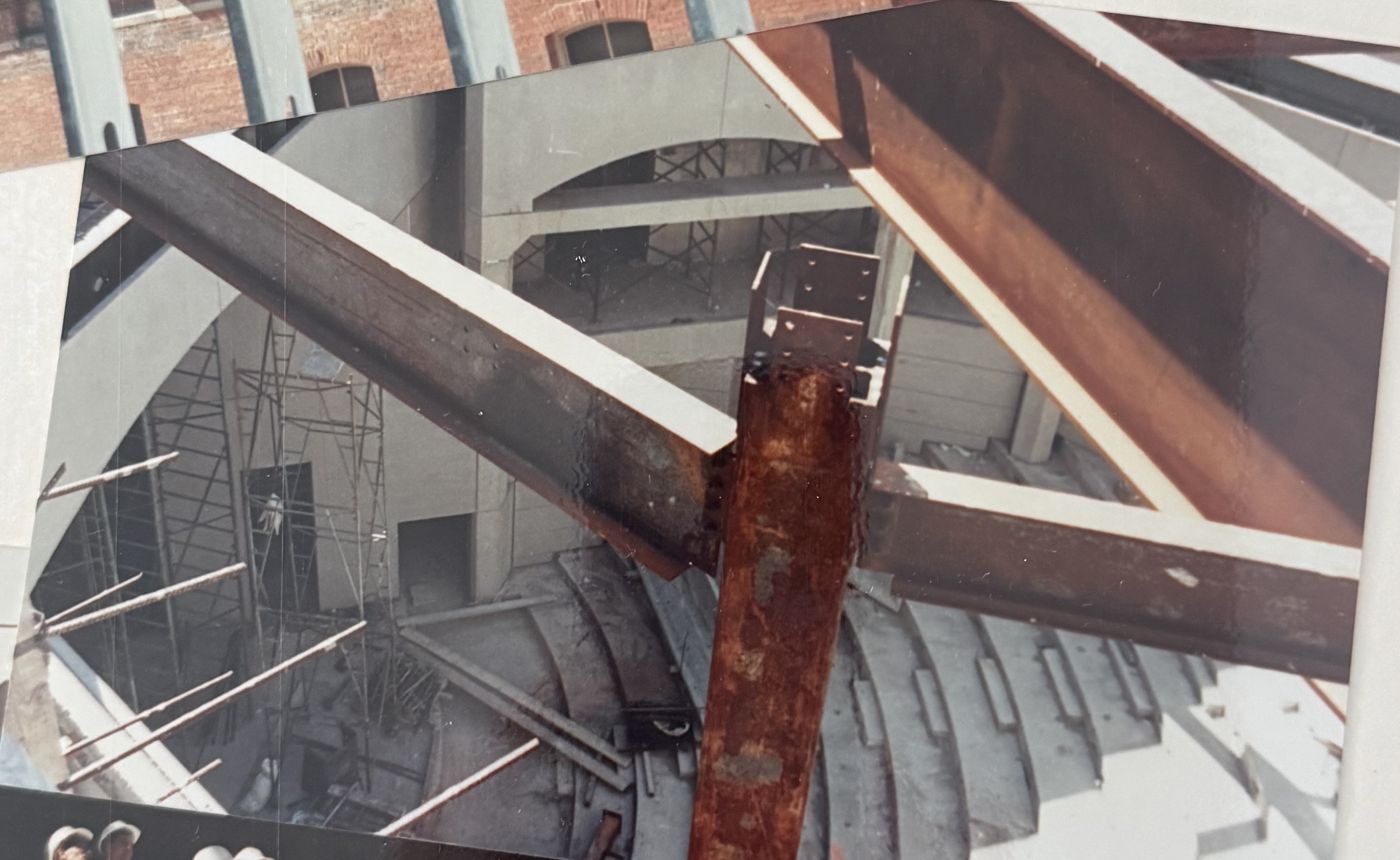
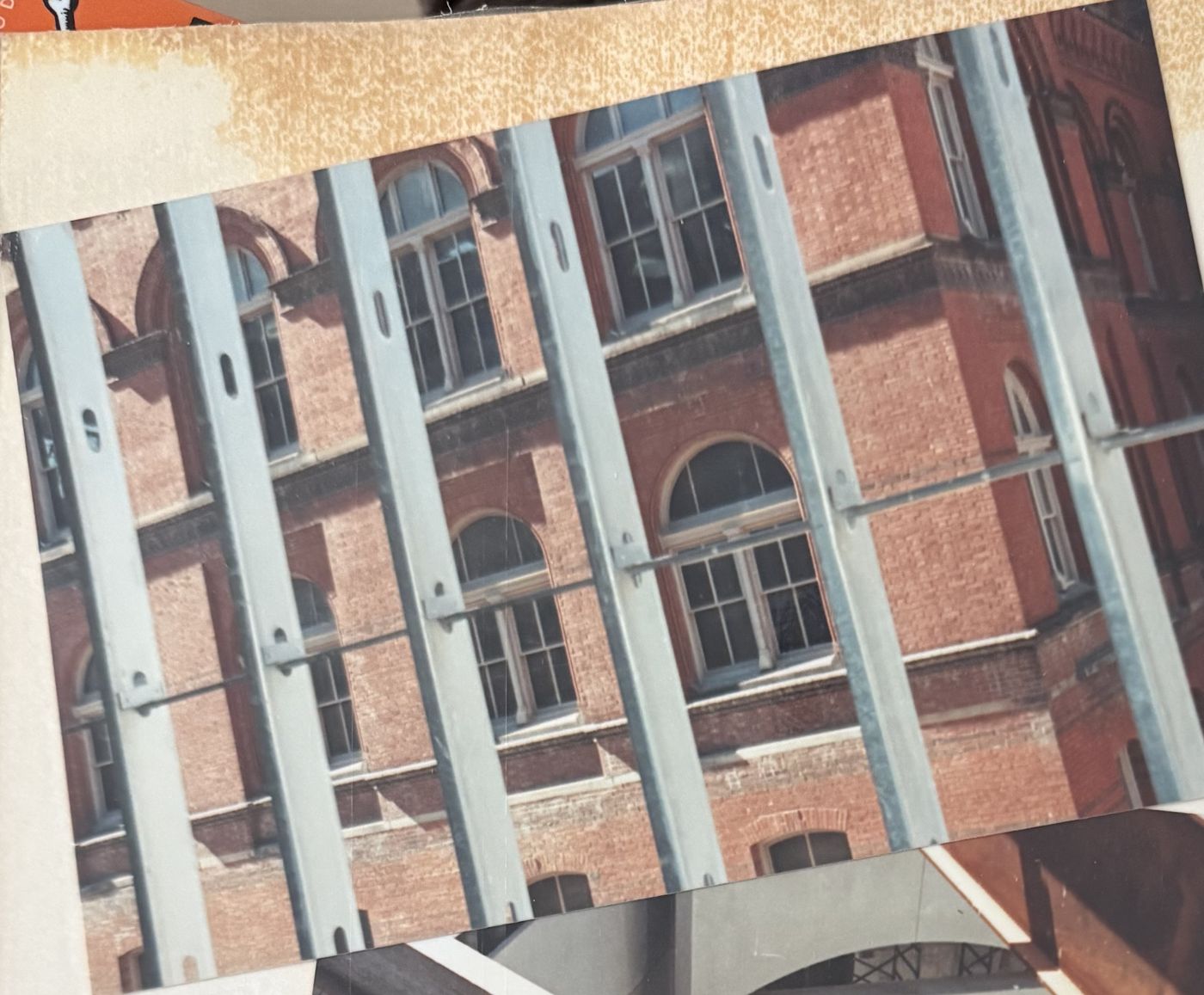
The interns were taken into the construction site in hard hats. The photos from those visits show the bones of the building: rusted steel beams crossing over curving concrete stairs, scaffolding against bare walls, and new steel framing set against the red brick of the older building next door.
Steel and stairs. Rusted beams above a curving concrete staircase.New steel, old brick. Framing rising against the red-brick building beside the site.
“Bill the architect,” as the scrapbook labels him.
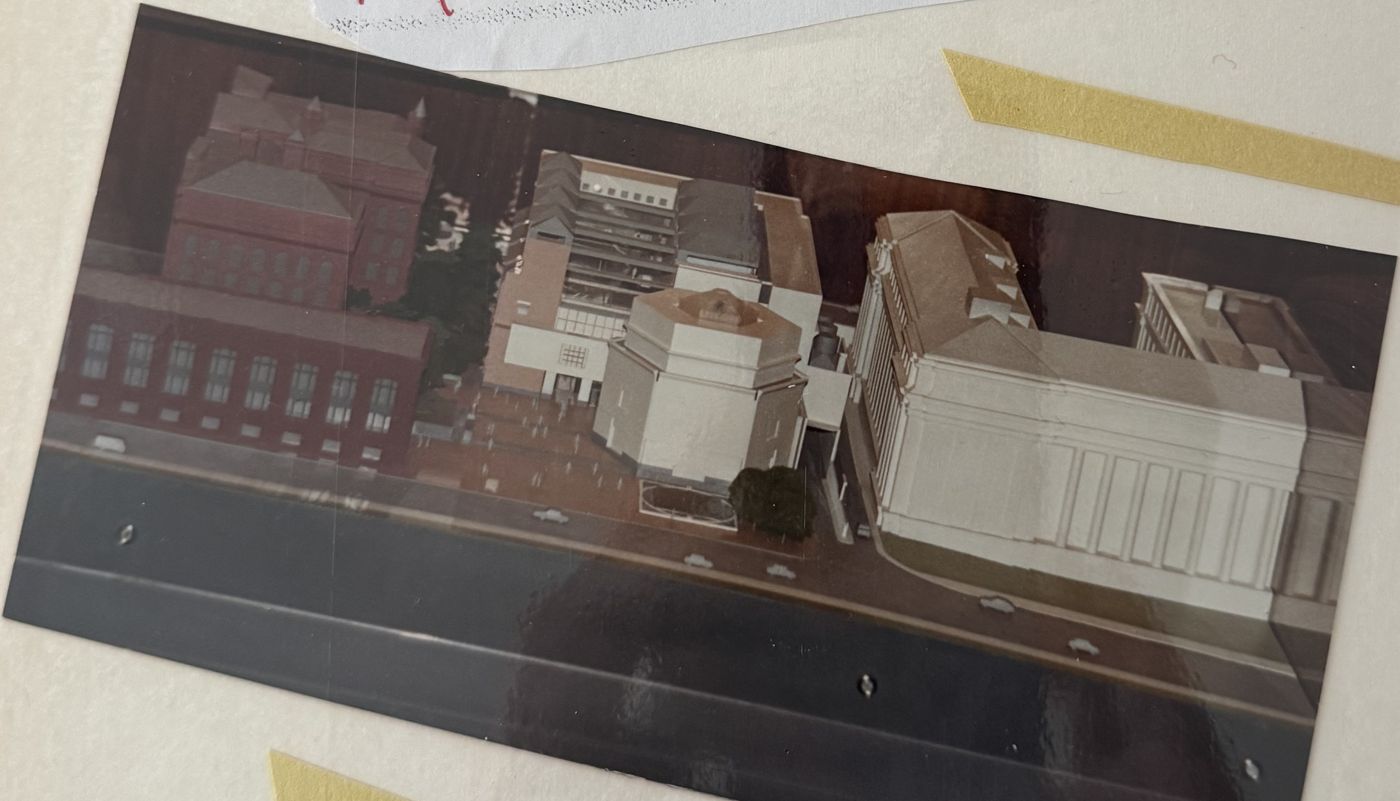
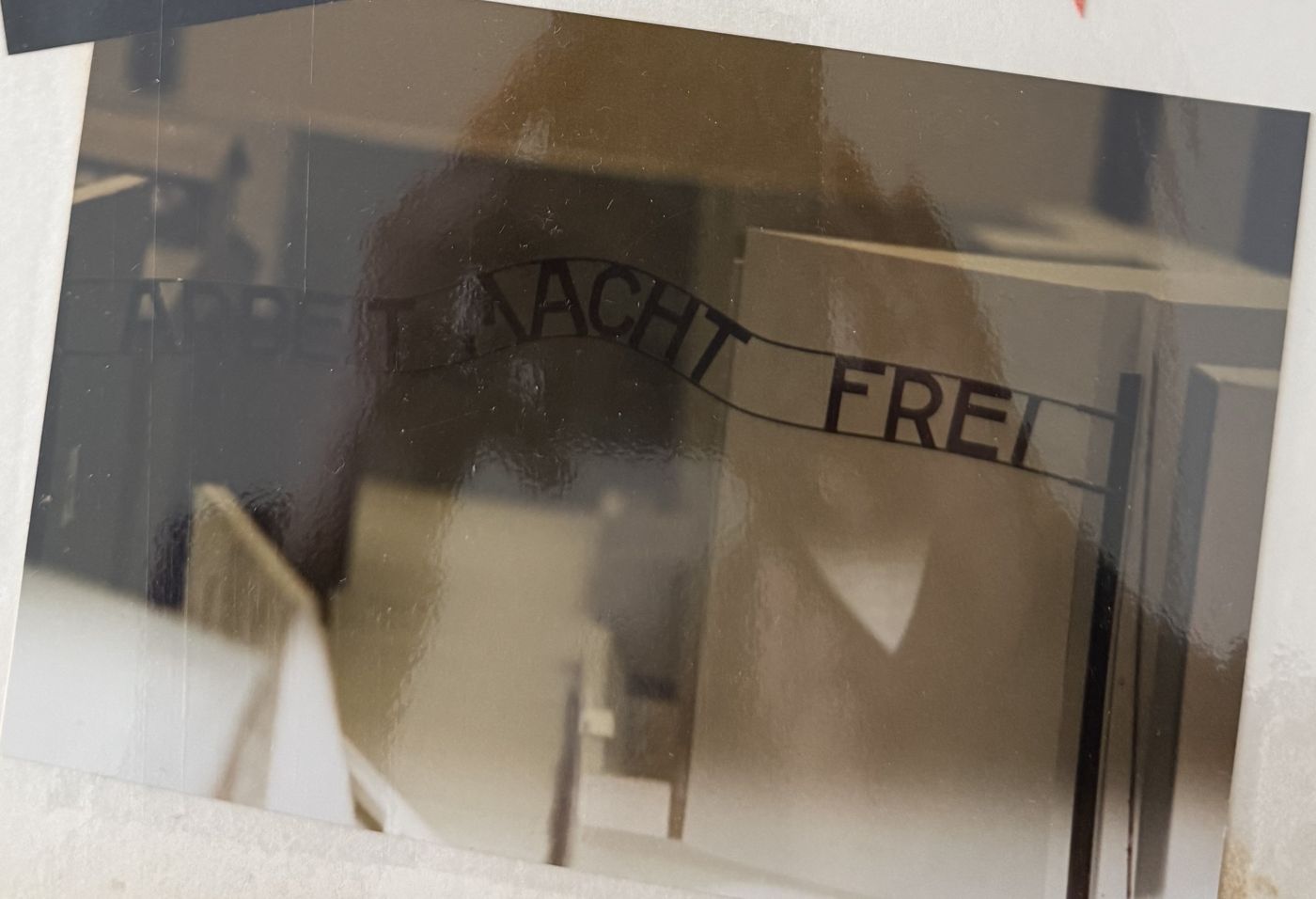
The scale model of the museum on its block, between the red-brick building and the white stone building next door.“The models.” An exhibit model with the “Arbeit macht frei” gate lettering.
The summer interns, 1991
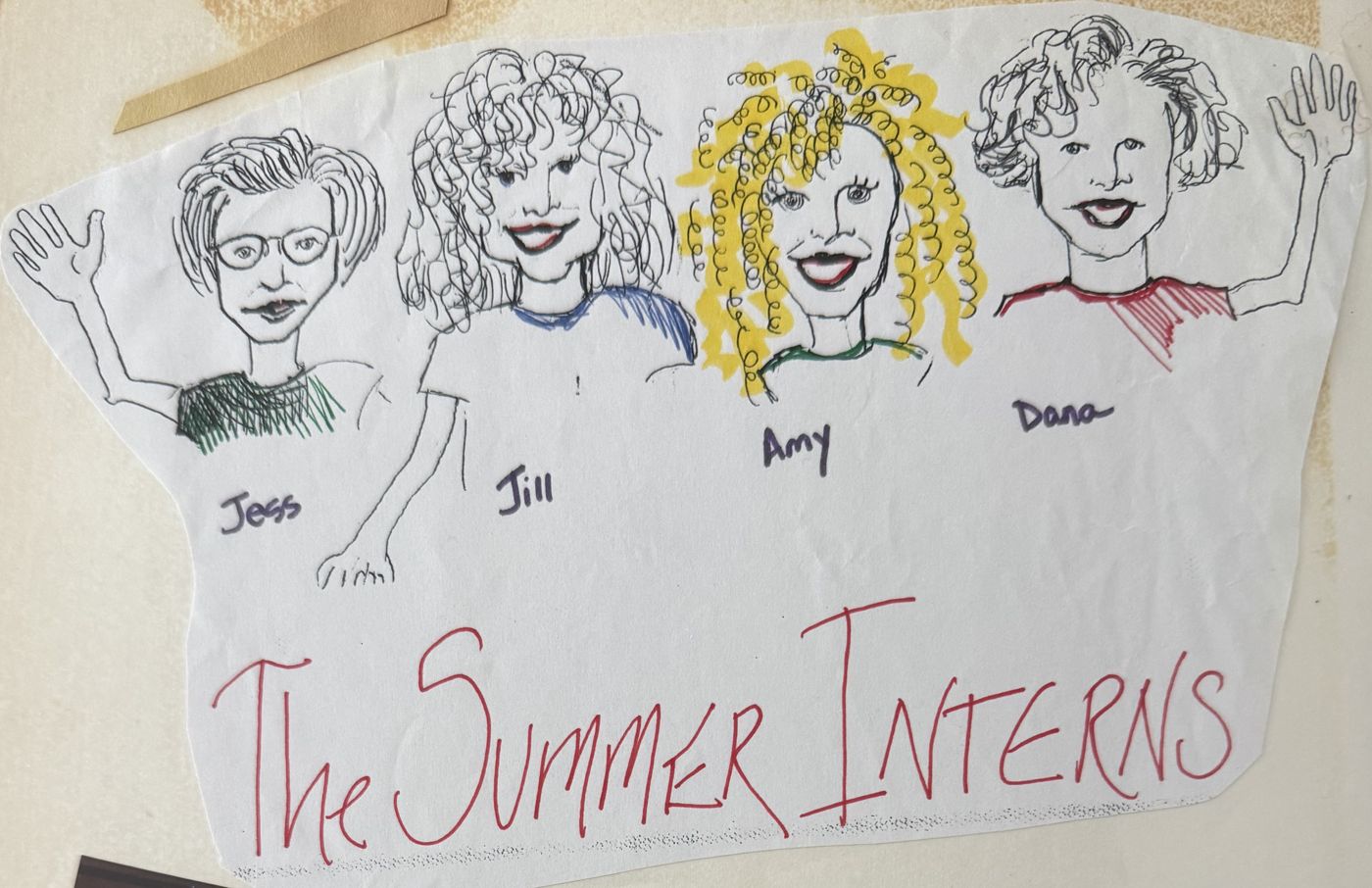
Jess, Jill, Amy and Dana
In the summer of 1991 there were four of them, drawn by Dana in marker with their hands in the air: Jess, Jill, Amy and Dana. The staff called them the Four Amigas, a.k.a. the Intern Chics. Neil, another intern, rounded out the group. The scrapbook belongs to Jill Himelfarb, who shared these pages with Dana in 2026.
“The Summer Interns.” Dana’s marker drawing of the four, saved in Jill Himelfarb’s scrapbook.
Rap wars
Typewritten verses across the office
The interns typed rhyming roasts of the staff and left them to be found, and the staff typed rhymes back. One of the interns’ raps, to a staffer named Rob, is dated July 12, 1991, and ends:
So there you have it, we're all through,
We're the summer interns and we're rapping to you!“Write-a-Rap-to-Rob,” 7/12/91 · See the full rap →
Rob answered with a poem of his own, “To the Four Amigas.” His verse for Dana reads:
There is Dana, so competent, charming, calm and wise,“To the Four Amigas: a.k.a. the Intern Chics” · See the full rap →
Another poem, “A Farewell to the Interns” (see the full page), calls her “Danahur.” When a colleague named Cheryl got engaged, the interns ran a joke about wedding crystal, and the scrapbook still has the note: “We hope you get crystal. Real crystal.”
Please keep us in mind through the year-
We were the ones who brought you lots -n- lots of cheer!!The interns’ farewell rap, summer 1991 · See the full rap →
The people
Who was there
Bennett Samson, a supervisor. On some Fridays after hours he hosted a happy hour in his office, pouring whiskey shots into little waxed Dixie cups. Dana remembers the whiskey eating through the bottoms of the cups.
Celeste, who ran the volunteers
Sonny Polsky, who worked for Celeste
Ralph Grunewald, a senior executive
Mark B., who came from the Kennedy Center to lead development
Lisa Levinson, who, as Dana remembers it, was the niece of film director Barry Levinson (Diner, Rain Man)
Rob, Melis, Carol and Alec, Tianne, Ellen and Dave, more of the office staff named in the interns’ farewell rap
Bill, the architect
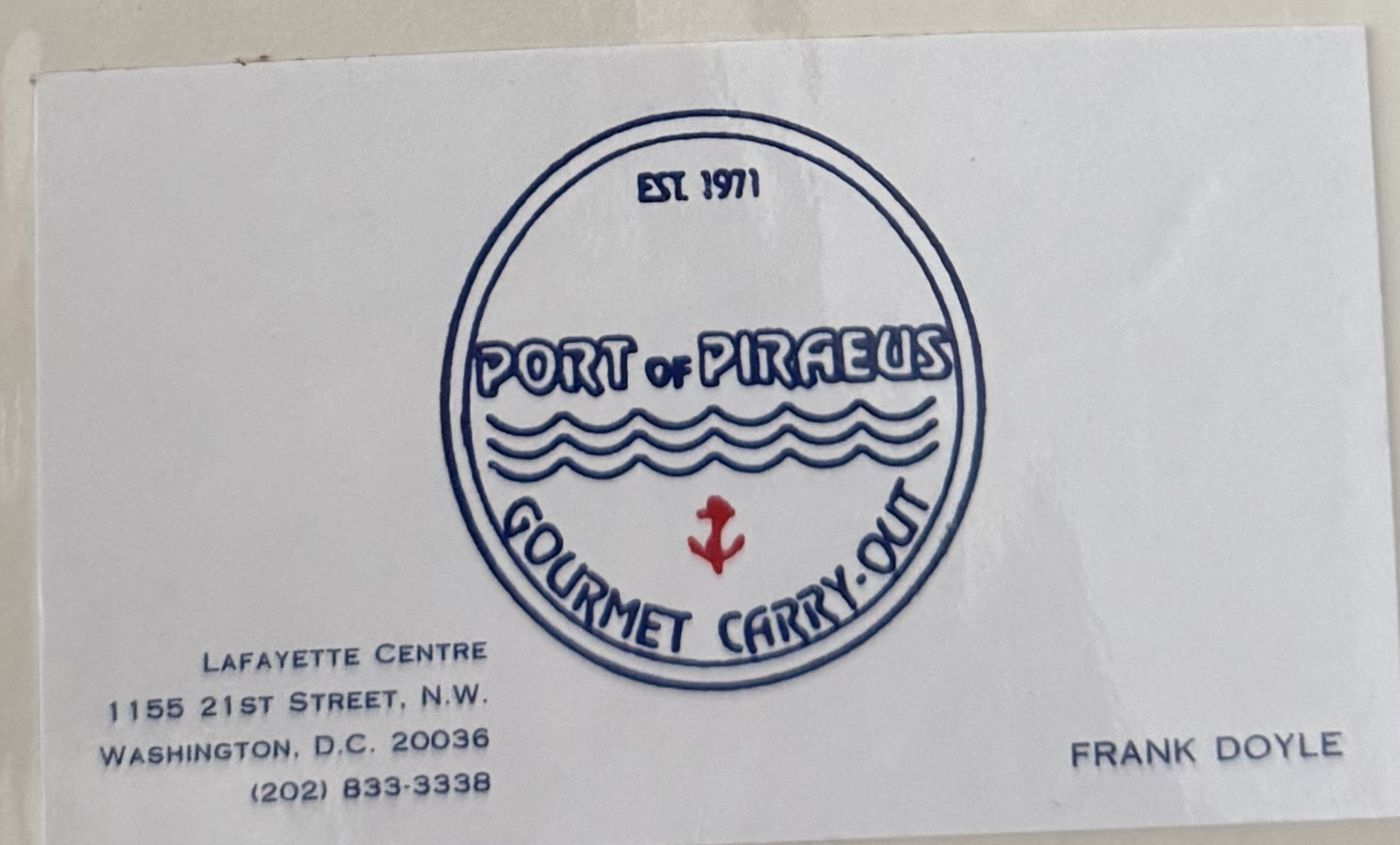
When they could get away, lunch was Port of Piraeus, a gourmet carry-out in the Lafayette Centre at 1155 21st Street NW. The scrapbook note beside its business card says it all: “Our favorite lunches.”
“Our favorite lunches.”
Into the art
Faces from the archive
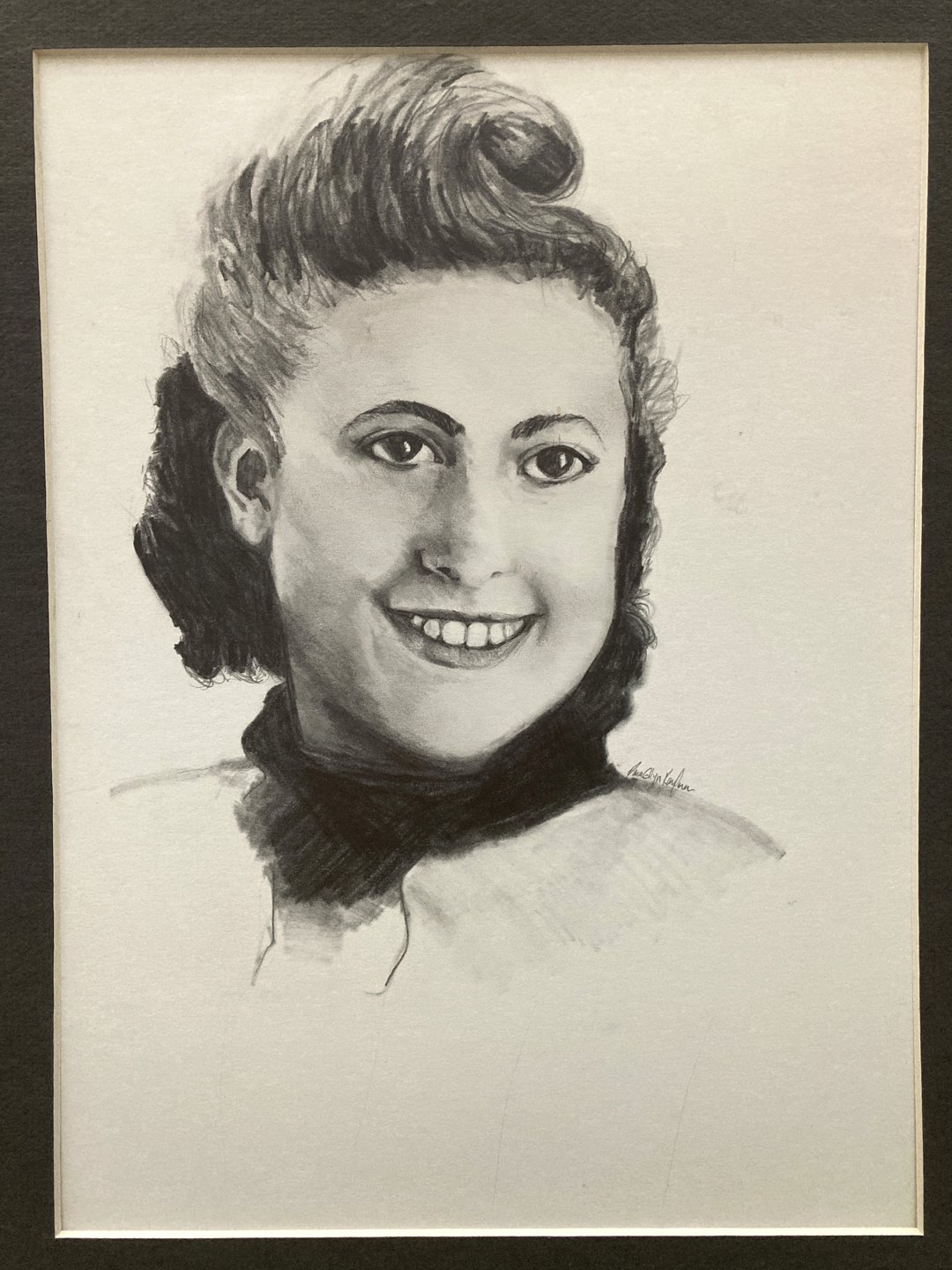
While she worked, Dana began drawing. From photographs of survivors and victims that she came across in historical documents and donated items, she made portraits in pencil. She still has one of them.
Pencil portrait by Dana, early 1990s. Drawn from a photograph she came across in the museum’s documents and donated items. It is the one portrait from that time that she still has, signed with her maiden name, Dana Ellyn Kaufman.
As far as Dana knows, her family has no direct connection to the Holocaust. Her mother’s parents came to America from Russia, and her father’s side may have Austrian roots. Her family has never been good at keeping its history, and she is still looking for more.
Where the maps led
From the light table to Skadden, Arps
The museum gave Dana a trade, and one job led to the next. After graduating from GW in 1992 with a BA in Fine Arts and Art History, she was hired at ADC The Map People because of her cartography experience at the museum. She worked there from 1992 to 1994. ADC, the Alexandria Drafting Company, began in 1956 when a Northern Virginia real estate photographer started mapping the houses he shot, and grew into a publisher of street atlases across the Mid-Atlantic.
Dana started as a cartographer, back at a light table, this time tracing contemporary street maps. Her work was updating whichever atlas was due for a new edition: adding new streets and making edits as roads changed. Every page of every ADC atlas carried one secret: a tiny fake detail, like a short dead end or a harmless label, that would never confuse a driver but would expose anyone who copied ADC’s maps. A master key recorded the secret on each page, and Dana got to invent some of them herself.
She then moved to ADC’s graphic arts department, designing atlas covers, advertising and marketing pieces. She also drew illustrations and wrote a movie review column for the company newsletter.
In 1994 the law firm Skadden, Arps hired her, again because of the maps. She had never used digital mapping software, but she was a digital artist with mapping experience, and she impressed them in the interview. One of her big early assignments was mapping the branches of two merging banks for the lawyers working on the deal. She stayed at Skadden for eight years, painting nights and weekends, until early 2002, when she left to paint full time.